Friday, December 07, 2018

My humble spiritual concept


My humble spiritual concept.
What little I have heard and read from the spiritual zone make me believe that Brahman is the impersonal (Avyaktigata bhavam) bhava of God.  There are only two things, one the impersonal form of God, Brahman or PARAMATMA (God) and the other the KARMA.  PARAMATMA is like the air inside and outside of a pot kept open, the mouth up words. When the pot is broken or destroyed, the air inside and outside becomes one. Brahman is like that. It is not an Object, it is the Subject, and the one and only Subject. The potency of the Brahman is of great magnitude, diverse and quite indescribable – ‘‘Ananatham, Ajnatham, Avarnaneeyam”. Living things can live only on a Living Substratum and that is the Brahman, the impersonal form of God. Is there any personal form (Vyaktigataroopam) of God? Yes, of course, Brahman can take any form. We will come to that in the midst of the following lines. KARMA is the consequence of our actions, done by ‘Manasa, Vacha and Kamana’- including that of our past janmas. There is no way out, to escape from KARMA. Every ‘paramanu’ of it, we have to experience.  What we sow, so we reap. Brahman remains a witness to it, like to its Maya or deluded potency. Understanding this great truth, and to make it convenient, comfortable and easy for those dull-minded -‘manda budhis’- like us, to worshipping with focused attention and concentration, our ancient Sages/ Seers/ Rishis, sitting austere and sublime, doing severe penance and ‘tapas’ in the dark caves of Himalayas and other such sacred  places, where they could commune with the Brahman, which could create, sustain  and annihilate anything and everything in its simple imagination -(Sankalapamathrayil)-  classified, like Bhagavan Veda Vyasa divided Vedas, into three forms  from Brahman as ‘Bahma, Vishnu and Maheswara’. Our Seers made it clear that they are not different from Brahman, the PARMATMA or God, but only to give the devotees a personal form or attribute (Vyaktigatha swabhavam) to worship with true faith, seeing them with their eyes, in the most beautiful and attractive forms.
The great Seers of the Yore felt the pulse of the populace by their foresight that even the Trio manifestation of  Brahman, as Brahma,Vishnu and Maheswara, is difficult to reach by them and so they were given thirty three crores of manifestation of Brahman, in a vibrant variety of form of demigods or Devas and Devis. Now they can pick and choose the Deva/Devi, they like to worship in a bhakti/prema/valsalya bhava of their own, in close proximity , as and when they like. People got very satisfied, they worshipped and still worshipping their Moorthis, gladly for material, and sometimes for spiritual benefits. It proved a fact that God alone or people alone, cannot live happily; only when interacted together they can live, which is called ‘Lokayutham’ or materialism. It reminds me of Jawaharlal Nehruji’s words, ‘The East is East and West is West, but when both combine, produce the Best. The Lord and His creations, together make the world. Bhagavan is capable of doing anything sitting quietly in His Abode, by His sankalapa alone. He is the number one ‘Bhavagrahi’, He understands our bhava (the exact thought in our mind) well beforehand.
He incarnates not only for ‘Parithranaya sadhoonam , vinashaya cha dushkrtam,dharma samsthapanarthaya etc., but also for, mixing and mingling with His loved ones.  But what He suffered on that account for us, is unaccountable, unimaginable and we cannot pay off the debt even if we have seven janmas more.
Man, as a social being cannot avoid society, especially house-hold people. This may be the reason why Lord Krishna loves more devotees from ‘Grahastasramis, ’than from ‘Sannyasins’, as He spoke in Srimad Bhagavat Gita. We should be social for a meaningful and happy life in the world and always indebted to God.  God, whether in personal form or impersonal form, is Omnipotent and is ‘Sudha Satwa’. By birth itself it is so, since Bhagavan was born in the   Milky Ocean (Palazhy).  He is ‘Ksheerodakashayi’. But, we are born in the amniotic fluid (water) of our Mother- Udakodakashayi. We are not born Sudha Satwa, by birth. It is also not easy to become Sudha Satwa, since by birth itself, we are an admixture of the    three gunas-Satwa, Rajas and Tamas- put together. It says that in the colorful  abode of Bhagavan, Vaikuntam, there is no rain, heat, AC, rest rooms or the like. There are no entrails like ours, inside Bhagavan’s Body. Bhagavan’s Body is clean and it is called ‘Sachit’- Thirumeni. He is always inSachidanandaSwaroopa.  It says that Brahmaji took  years and special extra ordinary things like sky buds, roots  of grinding stones etc., from various places, for making the Thirumeni of Lord Krishna. In the final stage, after so many procedures, it became unique and effulgent by itself, producing ‘Kodi Soorya Prabha’.  Srimad Bhagavatam says that Lord Krishana is ‘Poornam, Brahma Sanatanam’. So, He is Poorna Brahmam.  We need not necessarily worship any other God, when Krishna is there.   He is easily available -‘sulabham’ too for  us, but quite unknowingly we are searching God somewhere else, keeping Him  always with us. He is ‘Bhavagrahi’. He knows our Bhava fully well, towards Him  and towards any other things. He wants only our unconditional love.  He is pouring it on us, in unalloyed form. Make Him happy with service, He will make us enjoy our life. Do not go even a step back from His service, thereafter. I think it is high time for us to stop the search of any other new God.  Live strictly observing ‘Sanatana Dharma’, which is not alien to us, since what we follow unknowingly every day in our life is Sanatana Dharma or Bhagavata Dharma. It is in our blood. Human birth, I humbly feel is to be used a for making Bhagavan happy, serving Him as much as possible to express our deep gratitude  towards Him and not asking for more things. Do our Karmas unto His Lotus Feet,  the Karma Phala will not afflict us and we will never get any punarjanma, aswell. Sadhu seva is Narayana Seva. Satsangam enlightens us in spirituality and gradually due to inner transformation, we will develop love towards God and people.
            Walk through the path of Dharma (righteousness), hold the flame   of Vairagya (dispassion towards unnecessary things) in your hand, let there be tears of Bhakti towards God in your eyes with gratitude, and the ultimate aim be, to acquire Jnana – Brahma Jnana (the knowledge about the impersonal form ofGod). The above path leads us to Self-realization and God-realization, which will make us Jeevan-Muktas.
                            Jai Hind.                                    God bless America.
‘Loka Samastha Sukhino Bhavanthu’
‘PadaravindameSharanam, Guruvayoorappa Sharanam

Wednesday, December 03, 2014

Some of the ' Balaleelas' (Childhood pranks) of Krishna and message they convey.

               Krishna's Balaleelas are innumerable. Even the thousand tongued 'Anantha' cannot describe them in full. Each story,when we go deep into it, conveys a secret message that the Spiritual being with in us is Real Bhagavan. We have to realize it. When we discover our own self , we find our own Lord. The Self is all and nothing exists beyond and apart. We do not search anything else, because all other things are Maya.

              Putana for instance, the most fierce demoness, Kamsa sent to kill baby Krishna, attained Moksha in the last. That is the beauty of it. Even the very sinner becomes pure with the contact of Paramathma.

            Yasodama was fondling child Krishna in her lap. Suddenly the child became very heavy in weight like one made out of iron. She was unable to bear the weight and so she laid down the child on the ground and went to some household work. As directed by Kamsa, a fierce demon Thrinavartha suddenly came there in the form of a whirlwind and carried away the child.The whole Gokula was filled with dust and darkness. As the demon reached the sky, he could not proceed further because of the heaviness of the child. He became powerless and since the child was holding on the demon's neck tightly, the demon fell flat breathless on his back, carrying the child on his chest. All his limbs were scattered here and there.The Gopees and Gopaas watched the scene with awe and wonder.He was also given Moksha in the last.
           
             Baby Krishna was very naughty. He would untie the calves of the Gopees before the milking time . He would steal their milk, butter and curds and divide them among monkeys, after eating , what they want. He made wholes in the pots hanging  in the tripod. With the help of a mortar, he reaches them. The dark rooms were illumined by the glitter of his own body and jewels. Once a Gopi took hold of him red-hand and went to Yasodamma, about this mischief. Surprisingly she found child Krishna standing by his mother's side. She felt ashamed and went home.
           
             On another day, brother Balaramaswamy and some other boys complained to Yasodamma that baby Krishna had eaten earth.She got afraid that this will impair his health. When asked why he did so, he replied that he didn't eat earth and if she wanted she could examine his mouth. Baby Krishna opened his mouth and Yasodamma saw the the whole universe of sentient and insentient objects , the sky, the cardinal points, the mountains, continents, seas, the whole earth, air, fire, the Sun, the moon and the stars , the seven dweeps, planets, Devas, the mind, the senses, Karma and seeds, even Brindavan and herself in his mouth.  She was really surprised and understood the truth that it was Paramathma, standing before her.  She lost her memory of the vision by His Yoga Maya.
She knew Krishna to be her own son and put him on her lap.
           
              The above story exhorts the four Sidhanthas enunciated in our Sanathana Dharma  Shasthra , known also by other names like the breath of Lord, our religious constitution, the strong edifice of Indian Philosophy and the like.
The Sidhanthas are:
1.  The entire phenomenal world we see around us, is the manifestation of Brahman
2.  With the process of  continuous, contemplation, profound and repeated meditation and                  internalzation  (Nithidhyanam) , one can commune with the Universal Force (Prapancha Shakthi) or Brahman. Other examples from Srimad Bhagvatham, are Prince Dhruva talking with Lord Sri Hari, Prahladakumara taliking with Lord NrisimhaMoorthy and Naradarshi communicating with all Devas.
3.  There are two kinds of egos ( aham bodham) in man: a) the .phenomenal ego or normal ego  b) higher ego (nithanda ahambodham) or eternal ego.  With the blessing of a Sad Guru, using the higher ego, a true disciple can realize his identity with the Brahman.(Swaswaroopa Sanddhanam), and ,
4.  The ultimate aim of human birth is none other than realizing his identity with the Eternal Self and attain Brahma. It is the only way for 'Brahma Nirvana'.
                 Child Krishna liberated two Arjuna trees , in Brindaban, who were the sons of Kubera- Nala koobara and Manigreeva - and who were cursed to become trees on account of their pride by Naradarshi. Krishna got the name 'Damodara' from that incident.
                 Child Krishna's escape from Shaktasura, Vatsaura, Bakasura, Aghasura, Dhenukasura, Pralambasura, Chanooran, Mushtikan, Arishtan, Keshi, Bhouman, Vani, Narakasura, Gardabhasura, Vyomasura, to name a few,   killing all of them and giving Moksha in the end are few other stories of great interest.
                  He suppressed the pride of Kaliya and saved the people around the place.
                  He killed the huge Elephant 'Kuvalayapeeddam' of Kamsa and later Kamsa.
                  He swallowed the whole Forest Fire two times, that occurred in Vraja and Bdharika, and saved hundreds of thousands of people and cattle.
                  Stealing of Clothes of Gopikas is a very interesting story and the Gopika Geetham is very sweet and melodious.
                  His charming Music from his Flute was so wonderful that every thing in the world seemed to listen to it and enjoy.
                  Govardhana was blessed by Him, in a story of a conflict with Indraji.
               
                  Likewise hundreds of thousands of Balaleelas are there in Srimad Bhagavatham and in many Scriptural texts. Iscon has an exhaustive repository of them. Still, even in these days, new stories are pouring in from almost every where and they flourish ubiquitously. I am certain that Krishna is among us  and that is why new stories are coming out every day. In Guruvayoor Sri Krishna Temple, which is known as 'Bhooloka Vaikuntam', miracles are happening almost every day; sometimes  only few stories come out.
                   Do you think that we can evaluate Krishna's immense potentiality and power from these stories, and His similar Avathara Leelas? They are really only a very minute part of His Supreme Power,which is beyond our imagination.
                   Srimad Bhagvatham testifies to it in Verse 21, Chapter 87, Canto 10 (Utharardham) as:

                                "duravagamaathmatatvanigamaaya thavaathathano :
                                 charitha mahamruthaabdhi parivartha parisramanaa :
                                 na parilashanthi kechidapavarggamapeeswara the
                                 charanasarojahamsakulasangavisrushtagruhaa :
           
                   (While reading the above verse, kindly pronounce all syllables as such)

                 Please see even the first word used is 'duravagam', meaning so difficult to realize (in the sense unimaginable, immeasurable, immensely strong and voluminous). We cannot even dream of His power. The verse continues to say that some people who got over there tiredness due to the cycling of births and deaths, by immersing into the ocean of nectar-like stories relating to Him, who assumed numerous personal forms for revealing the truth about His own Self, which is very difficult to realize, and who renounced their home as a result of their company with devotees, do not aspire even for liberation. We should never try to evaluate His power. It will end like the story of the salt doll, tried to measure the depth of the sea.
             
                 His power is Anantham, Ajnatham, Avarnaneeyam. The only way out is total and unconditional surrender (sampoorna sharanagathy) at His Lotus Feet.

                         "Padaravindame sharanam, Guruvayoorappa Sharanam"


Tuesday, July 03, 2012

Kerala Nair Wedding, Simplified.


                                                    Ohm Namo Bhagavate Vasudevaya:

                                                    Kerala Nair Wedding Ceremony.

                                                                        (mprnair)

         Hindu wedding ceremony had its origin from the ancient Vedic period. Kerala Nair Wedding Ceremony is also conducted imbibing the spirit and sanctity of Vedic Rituals. It can be summarized, especially for Malayalees abroad to follow, in eight paragraphs, as below: (It is nice to announce this procedure to the audience before beginning the wedding celebrations or to inform the invitees in advance, exhorting them also for sharing the Maha Prasadam at the end of the function)

1. Seeking God’s blessings: At the outset the bride / the groom visits her / his respective Kula Devatha Temple (or any God / Goddess Temple for that sake) with a pure mind, heart and body, in the early morning on the wedding day, and perform worship of the Deity, according as they like, with their preceptor’s advice.

2. Giving Dakshina to elders: Before starting from home for the wedding ceremony, they give Dakshina to their elders present there, for their blessings. (Dakshina to father and mother, also mutually, is given in front of the Kathirmandapam, just before the wedding).

3. Receiving Groom: As soon as the groom and party arrive at the place of marriage, the brass oil lamps at the Kathirmandapam are lit, colorful pageantry of thalappoli (each tray of Thalappoli contains rice, thamboolam, arecanut, arecanut peduncle (kamukin poonkula), mirror, folded kasavu neriyathu, kumkum cheppu, coconut halves, and small lamp) led by the brides’ maternal aunt, who holds the Ashta mangala deepam in her both hands, along with Nagaswara melam, are made ready to greet him at the door step. The Brides party moves towards the Groom’s party with Peedham (piece of plank for the Groom to stand while washing his feet), Kindi with water, Floral Garland, Bouquet, Sandalwood paste, Limes, Rose Water etc., led by the would be brother-in-law. He washes the Groom’s feet at the peedham first, puts the garland, gives the bouquet, puts a thilakam on his forehead, gives the lime fruit, sprays the rose water, shakes hands with him, hugs and brings the groom near the Kathirmandapam, in a procession, accompanied by thalappoli and melam, along with his party, greeted properly by giving limes etc. especially to the ladies of the Groom’s party.

4. Entering Kathirmandapam: The Groom before entering Kathirmandapam, gives dakshina to elders if any remains there, to both the parents, and then bows and welcomes all invitees around with folded hands, to get their blessings. He is then brought to the Kathirmandapam, adorned by nilavilakku and nirapara, held in hands by his father. After a small worship of the Deity at the entrance of the Kathirmandapam (supposing Lord Ganapathy at the orukku, Goddess Saraswathy and Gurudevs at the lamp) the Groom steps on with his right leg and sits at the peedham there, arranged for the purpose, leaving enough space on his left for the bride to sit.

5. Arranging Mantrakodi: In the meantime, the Groom’s uncle, close elders and immediate relations sit on a blanket / mat near the Kathirmandapam and arrange in a tray the Manthrakodi, and golden chain etc., which are to be given to the Bride by the Groom, at the wedding, immediately after mutual exchange of the floral garlands.

6. Here comes the Bride: Now the Bride’s father holds her hand and brings her accompanied by thalappoli and melam followed by relatives. She also gives Dakshina to both the parents. After greeting all the invitees with folded hands and bowed head, she is also brought to the Kathirmandapam by her father holding her hands. She also worships the Deity there, in the same way as the Groom did, offering flowers etc., and with her right leg enters the Kathirmandapam and sits on the left side of the Groom, who is waiting for her to sit by his side.

7. Wedding: The father of the Groom gives him the Mangalya sutram (Thali) appropriately, after showing it to the lamp and praying for their deergha sumangali yoga. The Groom in turn ties the mangalya sutram around the Bride’s neck, at the most auspicious muhurtha proposed for the wedding, and Groom’s sister standing behind, ties it tight. Vaikkurava and Gatti melam (Mangalyam thandunanena mamajeevana hethuna …..) are to be played at the background. Now the Bride gets up and stands in front of the Groom. The father of the Bride gives her the garland, which she puts on to his neck. Next the Groom puts the other garland given to him by his father on her neck. He then puts the golden chain, obtained from his father, on to her neck. Now she puts the ring, got from her father, on Groom’s right ring finger and he puts another in exchange. Now the father of the Groom gives him the tray with the Manthra Kodi. After asking three times “pudava kodukkatto” the Groom gives her the Manthra kodi. In the same way asking three times “pudava vangatto” she bows and receives the tray with the Mantrakodi. They stand back. Now the father of the Bride comes behind the couple, places a thamboolam in the right palm of the Groom and places the right hand of the Bride on top of it. After this Panigrahanam they stand there for a while. The mother of the Groom now puts 'kumkum' on the forehead of the Bride. This is called 'seemanda rekhayil sindooram aniyikkal'. Holding hands the couple walks around the Kathirmandapam three times and then they step down from the Kathirmandapam, and walk into a room nearby where they are given milk and plantain fruit by the bride’s mother first, followed by others. The couple change their costumes. She now wears the manthrakodi. After the ordeal of photos etc., they take part in the Feast (sadya) there after.

8. Bharthru Gruhapravesham: At the proposed muhurtha, the couple enters the groom’s house where they are welcomed with lighted lamp and treated by rituals and greeted by all. Milk and fruits are given again by the groom’s mother and others.

           Reception: A reception is arranged for the invitees in connection with the marriage thereafter.

                                                                          Subham


Sunday, July 01, 2012

Engagement, before Nair Wedding.


                                    Engagement before Nair Wedding
                                                                         (mprnair)


            The Engagement is done imbibing the spirit of Vedic Culture. It consists of three phases:-

1-The Announcement.

Just before starting of the Muhurtha for Engagement, standing in front of the stage set for the function, the father of the Bride or the person authorized for the purpose, after welcoming the audience, should announce to the invitees that engagement for marriage is going to take place here, between (Bride’s name and Groom’s name) and then he should introduce the family of the Bride and Groom to the public, in detail.

2- Exchange of Birth Charts (Jathakam Koda)

After Aarathy at the Ganapathy orukku, the father of the bride and the father of the groom should sit face to face in the seats allotted for them, in front of the lighted lamp. Then, he should ask the relations and audience present there three times, “ Jathakam Kodukkatto”, and then handover the tray with the ‘Thalakkuri’ of his daughter (Bride) to the father of the Groom. After asking “ Jathakam Vangatto”, the father of the Groom, should get the tray with the Thalakkuri, from the father of the Bride. Then he can give his Son’s(Groom), Thalakkuri , in return, in the same way to the father of the Bride. Here ends the exchange of birth charts.

3-Ring Exchange (Mothiram Mattam)

Now, the Groom is escorted by thalppoli, melam, vaikkurava etc. to the Dias, and after getting the blessings of his dear ones, especially of his parents, he worships his Kula Devatha and Lord Ganapathy at the lighted lamp and the ‘orukku’ there, and sits at the place earmarked for him, leaving enough space on his left for the Bride to come and sit. The Bride is brought to the stage in the same way as the Groom is brought, and after getting blessings from her relations and dear ones and worshipping at the lamp, she sits in the place, reserved for her on the left-side of the Groom. Then, the father of the Groom gives the blessed Ring to him and he puts it on the left ring finger of the Bride. In return, she puts the blessed Ring given to her by her father, on the right ring finger of the Bride. People can now shower flowers on them in token of their joy and blessings. The Groom's mother, can then put kumkum on the Brides seemantha rekha.

Now, the father of the Bride or the person authorized for the purpose, should read the ‘Muhurtha Charthu’ for wedding, containing the details of the marriage such as the addresses of the Bride’s and the Groom’s families; date, time and place of marriage etc. He can also express his profound gratitude to the public in having come and blessed the function. He can also humbly request them to kindly share the Mahaprasad arranged for the function invariably before leaving.


                                                                          Subham”


Saturday, June 30, 2012

Housewarming

                            
                         Housewarming, Kerala Style, Simplified:
                                                                  (mprnair)

                   House warming ceremony or Gruhapravesham or 'Palukachu' in Malayalam, is done after the construction of a house, which is mostly based on a Muhurtha (Auspicious time) for Gruharambham.
                  At the outset, a Muhurtha is got prescribed by a learned Astrloger for beginning the construction of the house (Gruharambha Muhurtham). Of course, it is nice if you resort to a 'Daivadheenam' (God's blessings), even before purchasing the land for construting your Home/ Flat. You can verify with the Astrologer whether the land is suitable for making a Home for you and whether you can go ahead with the work of construction with out any hindrance or the like things. Usually people will say that you should not begin such things when there is a fully pregnant woman waiting for child birth in your house or a very pretty old one is bed-ridden at that time.
                  The following 18 Nakshathras - Moolam, Makam, Rohini, Makayiram, Chathayam, Punartham, Pooyam, Uthram, Atham, Chithira, Uthradam, Thiruvonam, Avittam, Uthrittathy, Revathy, Ashwathy, Chothy, Anizham - are supposeed to be good for Gruharambham. Usually we do not take the 3rd, 5th and 7th Nakshathras from ours for all auspicious things. Of course, there are some exceptions for certain particular Nakshathras, which the Astrologer will tell you at that time. The malayalam months like Mithunam, Karkkadakam, Kanni, Dhanu and Meenam are avoided for Gruharambham.You should never go for it, when the Sun is transitting through Karthika Nakshathram. There should not be Mars in the 8th house from the Muhurtha Lagna.The 4th house should be clean; no malefic is allowed there.Also avoid Sun in the Muhurtha Rasi.
                   The most important item in Gruharambham is laying the foundation stone or 'Adishanashila'. It is called the 'Shilasthapanam'. So, it should be done exactly at the prescribed time for Gruharambham. Many people do a 'Bhoomipooja', before laying the foundation stone.Some are seen getting that stone blessed from thier 'Ishta Devatha' Temple. Arranging a small pooja on the spot is very welcome, seeking the blessings of Lord Ganapathy and other Devathas, including Vastu.The excavation for foundation can be done little earlier to laying the first stone.But, it is a custom and almost a belief that at the time of  the excavation for foundation,  Bhoomi pooja can be done. The excavation should be started from the North-East corner(Eshana cone) of the plot and the Bhoomi pooja also should be arraned to be done at that part. Before starting excavation, usually a fresh stump from a jackfruit tree or from a tree having sap, is fixed first exactly at the NE corner. It is from that stump, string is connected to those at the other corners, to ear mark the area for excavation for the proposed house. Some people use the Muhurtha for Gruharambham for fixing this stump. It is not correct. The Muhurtha should be used for laying the foundation stone. Ofcourse you can use a good time for fixing the stump also, just before laying the stone.You need avoid Rahukalam, Gulikakalam and Yamakandakalam, which are readily available in every Calendar. In some places, I had the fortune to witness, Eagle or Kite (Krishnapparunthu), roaming round , up in the sky, above the plot, during the Gruharambha Muhurtham.
                   Coming to Gruhapravesham, the same procedure used for Gruharambham, can be followed as far as the Muhurtham is concerned.The rituals may vary a little in that it will be nice if the Gruhapravesham is done immediately after the Ganapathy Homam in the early morning during the time of Sunrise at that location.Early morning is always supposed to be good or you can go for a good Muhurtham for the purpose by a learned Astrologer. Appropriate offerings should be made to Bhara Devatha and in local temples.
Usually the Pooja is arranged in front of the house towards one side, by the Sthapathy (Mooyhassari). It is nice that no one should be at the house when the family first enters into the house.It is well and good if it is possible to go round the house (Pradikshanam / circumambulate) once by the members of the family, headed by the lady of the house carrying the lighted lamp in both hands, obtained from the Sthapathy, after giving him the 'Sampradaya Dakshina', accompanied by the man of the house with the treasure chest, followed by other members of the family, with milk and pot, water-pot (Kumbhakudam) etc. Using the right leg, they should enter the house, and the lighted lamp should be placed at the North-East corner of the room, where they entered first. From the same lamp, the lady of the house can ignite the hearth in the kitchen, for boiling the milk. Afterwords, the milk should be given to all present. The workers or labourers should be paid first, tips as a token of indebtedness towards them for having built the house for the family.
It is advisable to give back a lime along with a betel leaf to every one irrespetive of those with presents.
                In either case, whether it is Gruharambham or Gruhapravesham, you should be present on the spot on the second day, to avoid the socalled 'Vischithi dosham'. You should stay and sleep over the night on the second day also in your new house.
                     Your Home is a 'Devalayam'; the man there is the Chief Deity, the lady is the Goddess, and the children are Upa Devathas. This concept will bring prosperity to your Home. Whatever you have, belongs to God; you are only a Caretaker. Do all unto Him with full Providnce and Dharma. HE will be always with you.
Jai Hind,
God bless America.
30th June, 2012. 


Tuesday, January 24, 2012

Last Rites of Hindus, For Malayalees abroad.

                                                       LAST RITES OF HINDUS:
                                                                    (mprnair)
                                   (à´…à´¨്à´¤്à´¯േà´·്à´Ÿി അഥവാ à´…à´¨്à´¤ിà´®ോപചാà´° à´•à´°്‍à´®്à´®ം)
                            
                              (Simplified for those, especially Malayalees, abroad)
                         
                            “ à´…à´¬്à´¦ à´¦ീà´•്à´·ാà´¦ി à´²ോà´ªേà´¨ à´ª്à´°േà´¤ാ à´¯ാà´¤ാ à´ªിà´¶ാà´šà´¤ാം,
                               à´¸്വജനാà´²്‍ à´¬ാà´§à´®ാà´¨ാà´¸്à´¤െ à´šà´°à´¨്à´¤ീà´¤ി à´–à´²ു à´¸്à´®ൃà´¤ി ”

It means , if we do not observe obsequies, it is supposed that the soul of the dead will not be eligible for
Moksha and also it will wander to enter into the body of any one closely related to it and will obsess that
person. Whether it is true or false, we are expected to do the rituals as a mark of our love and respect to the
dead one, not of fear of the dead, also since it it is being done from time immemorial. These Rites enable the
soul of the dead to transit successfully from the stage of ‘Preta’ to that of ‘Pitru’, which is eventually
supposed to be merged into ‘Devamsa’, in due course, provided we do the obsequies properly. At the
death bed itself, keeping the body clean, it is nice if possible we give drops of ‘Ganga water’, if the person
drinks the same. “Basil (Tulasi) water’, can be used as substitute. The following things, as far as possible,
may be collected for the procedure of the funeral, especially involving cremation: à´—ംà´—ാ ജലം, à´¤ുളസിഇല,
à´…à´°ി, à´šà´¨്ദനത്à´¤ിà´°ി, à´°ാമച്à´šം , à´…à´•ിà´²്‍, ദര്‍à´­, à´ª്à´²ാà´¶്, à´…à´¶്വത്à´¥ം മണ്‍à´•ുà´Ÿം, à´®ൂà´Ÿിà´¯ുà´³്à´³ കലശം, à´µെà´Ÿ്à´Ÿുà´•à´¤്à´¤ി,
à´•ിà´£്à´Ÿിà´¯ും à´µെà´³്ളവും, à´šുവന്à´¨ പട്à´Ÿു്, à´¨ിലവിളക്à´•്, à´Žà´£്à´£, à´¤ിà´°ി , à´•ൊà´³്à´³ി.(small dried twigs). à´…à´¸്à´¥ി
സഞ്ചയനത്à´¤ിà´¨്: à´¤ോà´°്‍à´¤്à´¤്‌, à´ªാà´²്, à´¤ൈà´°്, പനിà´¨ീà´°്, à´—ോà´®ൂà´¤്à´°ം , ഉതിà´°് à´ªൂà´µ്, à´ªൂà´®ാà´², à´¸്വര്à´£്à´£ം In case
there was no medical assistance, immediately after the death, family members can close the mouth and eyes
of the deceased, and put the arms straight. The body is cleaned and usually placed on the floor with the feet
pointing towards the South which is supposed to be the direction of the dead. The right and left toes are tied
together. (This should be untied just before cremation). An oil lamp is lit and placed at the head portion on
the North. Most often the body is bathed by purified water, and then dressed in new clothes. Sandalwood
paste is applied on the forehead. A new Cloth (Kodi Vasthram) may be put on the body from the family.
Garlands, wreaths and flowers can be placed on the body. Ladies and Children, after cleaning their bodies,
put wet rice and basil leaves at the mouth of the dead, before taking the body to cemetery or crematorium.
All the others who are bound to offer the same, do it at the crematorium floor. The body is then taken to the
crematorium or cemetery. The rightful person authorized to do the Karma, bathed and in wet cloth, puts as
the last, wet rice and basil leaves at the mouth of the dead. He then carries the pot of water three times
circum ambulating the body, while one lightly hits and breaks the sides of the water pot with the big knife
(à´µെà´Ÿ്à´Ÿുà´•à´¤്à´¤ി).and on completing three rounds the pot is dropped out at the feet of the dead. A small piece
each from the cloths put on the dead body, may be torn out and kept. à´°ാമച്à´šം, à´…à´•ിà´²്‍, à´ª്à´²ാà´¶്, à´…à´¶്വത്à´¥ം,ദര്‍à´­, all those things may be placed on and around the body, before burial or cremation. It may be set on fire or buried, as the case may be. All may bathe thereafter. If the body is cremated, ashes may be collected in the ‘Kalasham’, bought for the purpose, after neatly cleaning it with enough water, milk, curd, rose water, cow-urine, using the towel. The Kalasham may be wrapped in the piece of cloth taken from the dead body and the Kalsham may be decorated and taken with due respect, accompanied by lamp and lighted bathi to any punya river or sea, and immersed therein, with deep prayers for the rest of the soul and liberation. He may bathe thereafter. It is nice he does the ‘bali’ for 16 days, if possible. Thereafter, ‘Aandu bali’ or ‘Sradham’ may be done yearly, preferably on the ‘Thithi’, on which the person deceased. If it is convenient, after the first year, a ‘Kshethra Pind bali’, a ‘Thila Homam’ and a ‘Sayoojya Pooja’ may be done in any good temple, doing such poojas. One may get enough ‘Pitr-preethi’, because of these sat-karmas.
                                                                    

                                                                              'Subham’

Tuesday, September 13, 2011

My Bio

MY BIO:

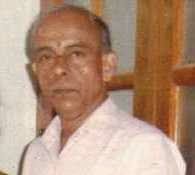
M. P. R. Nair has retired as Joint Secretary to the Kerala Public Service Commission. He is also a practising Astrologer for a little over 30 years. Originally hailing from the southern Indian state of Kerala, India, he and his wife are now settled in Pearland, Texas, along with his Son, Jeevan and his family.
Beside his post graduate degree in Literature, he has also obtained a post graduate diploma in Epigraphy and was awarded the title of Jyothisha Bhooshan after completing the necessary studies under the tutelage of learned persons and practitioners of this science. He is also well versed in the language of Sanskrit.
After his retirement as Joint Secretary, he actively pursued further studies in the subject of Astrology and has successfully provided consultation to thousands who have sought his advice, and is still doing it professionally well. He also has also a daughter and her family in Dubai, United Arab Emirates.

M. P. R. Nair has retired as Joint Secretary to the Kerala Public Service Commission. He is also a practising Astrologer for a little over 30 years. Originally hailing from the southern Indian state of Kerala, India, he and his wife are now settled in Pearland, Texas, along with his Son, Jeevan and his family.
Beside his post graduate degree in Literature, he has also obtained a post graduate diploma in Epigraphy and was awarded the title of Jyothisha Bhooshan after completing the necessary studies under the tutelage of learned persons and practitioners of this science. He is also well versed in the language of Sanskrit.
After his retirement as Joint Secretary, he actively pursued further studies in the subject of Astrology and has successfully provided consultation to thousands who have sought his advice, and is still doing it professionally well. He also has also a daughter and her family in Dubai, United Arab Emirates.

Tuesday, May 03, 2011

Do not ignore 'Luck', that is in our hand.

"Your mind has enormous hidden dimensions. Open yourselves completely to
whatever reactions and emotions the world evokes from time to time. Accept them
all without any reservation or resentment. By assimilating everything and all, your
mind grows deeper, stabler and more enriched.”
“Realize that this is your birthright. This is your potential and possibility. Don't argue, don't lament or weep! Your mind can be set right! And the power to set it right is within yourself. It is a question of using the power, employing it and asserting it every time. None of you should suffer unduly. There is no necessity at all.”
These are the golden words of Paramahamsa Parivrajaka Sadguru Swamy Bhoomananda
Theerthaji Maharaj, who is continuing his highly scholarly discourse, ‘Mukthi Sudhakaram’ in Asianet Television Channel from March 22, 2010 onwards, based on the 11th Skandha of Srimad Bhagavatham, Monday through Saturday morning every week .
As Ma Gurupriyaji commented on this huge ‘Yagna’ we are hearing words of wisdom
directly from the right Teacher. We are like having a Divine Bath in the Devotional
Nectar of almost all our ancient Scriptures , besides Srimad Bhagavatham. Swamiji quotes profusely and explains in unequivocal terms that even a lay man can follow him so easily. Hearing his words of wisdom, we experience the presence of the Supreme Lord in our hearts. Each of his word relates to the day to day life of every human being. There is a lot to study, imbibe and assimilate from his speech. I feel often that Swamiji is the Avatara of Lord Krishna, especially when he reiterates Bhagavan’s words to Udhava. We are the luckiest to hear it in this century. But, I am really afraid to hear Swamiji repeating recently with pain, amidst his discourse that it will be difficult to proceed this manifestly voluminous Yagna, unless there is ample involvement of Devotees to help sponsor the program, of which only we are all the beneficiaries. It is for us, each one, irrespective of caste, creed colour,sex or age.
May our minds remain fixed at Sri Hari’s Lotus Feet, to do what is necessary to hear this Maha Yagna in full. It is really an unprecedented and spiritually enlightening discourse of the greatest soul of this century.If we miss this we will be the most unlucky people.Let us pray and do whatever we can for the grand success of this 'Theevra Yagna', the kind of which we have not seen before and we may not see afterwords. Please do not ignore it now and repent later.
Om Namo Bhagavathe Vasudevaya.
'Loka Samastha Sukhino Bhavanthu'
mprnair; 3rd May 2011.

Friday, April 29, 2011

The 24 Gurus referred to in Srimad Bhagavatham.

Ohm Namo Bhagavate Vasudevaya.
The 24 Gurus referred to in Srimad BhagavatHam.
(M. P. R. Nair)
The present day life calls upon us to have an unusual degree of courage, awareness, growth, happiness, and prosperity. But, it is not an easy joke. Loads of difficulties are increasing day by day in our life, in spite of all our efforts. Life has series of problems such as poverty, disease, broken relationships, unhappy marriages, loneliness, depression, and prosecution and so on and so forth, besides, global suffering and natural disasters like earth quakes, floods, famines and tsunamis and the like. Some of them are very difficult to solve. It may not be so easy to get a right Spiritual Master for all to show the right path, either. Here comes Srimad Bhagavatham to help us to a great extent amidst many other things, with the story of 24 Gurus from the open nature, whom we can keenly observe and learn from them many helpful hints to solve many of our problems. The process of solving problems may perhaps be augmented if we keep up some of the basic requirements such as our unconditional love towards God with the ultimate aim of attaining Brahma Gignasa through Dharma Gignasa, and then selecting the righteous path of Pravarthy Marga, through the proper Nivarthy Marga. Dharma Gignasa involves righteous living and Brahma Gignasa enables us towards achieving Self-Realization. Nivarthy Margas are like taking wise decisions after Sravanam, Keerthanam, Mananam, Nitidhyasam and Dhyanam etc., and Pravarthy Marga is in executing things in the most systematic, righteous and perfect way, without prejudice to anyone.
Canto 11in Srimad Bhagavatham teaches us about whatever we want in our lives. One of the reasons for the eleventh Canto to be known as the crown of Bhagavatam, is because it contains innumerable discourses and Upakhyanas, with simple illustrations as to how we could live a fearless life. Swami Vallabacharya beautifully expounds the uniqueness of this Canto since it talks about liberation to both the Lord and the common people or jivas. The Lord became Srimad Bhagavatham to play in the hands of normal mortals like us, and in due course liberate the jivas. This canto deals with Bhagavatha Dharma for a common man. It is Sage Shuka elaborating on Bhagavata Dharma.
Amidst them comes the beautiful story of 24 Gurus. It is in Chapters 7, 8 and 9 in Canto11. (Nearly 109 Slokas). The scene is just before Swargarohana of Lord Krishna. Udhava’s all efforts to retain Lord Krishna here in Bhooloka, during Kali Yuga, failed miserably. He was also in utter disappointment when he heard from Krishna that he was not taking him to Vaikuntam, either. He appeared for one moment as ignorant of the fact that Krishna is always there and that Bhagavan has just finished only His duties of one of His many Avatars. We know the truth, aswell as Udhava, that there is nothing as wonderful and sweet as Krishna's name in this whole world. Udhava is a typical example of a common man though he is Krishna’s cousin and a Sishya of Great Brhaspati. So many instances are there in Srimad Bhagavatham, wherein he puts doubts regarding so many silly things to Krishna. I think Vyasa Bhagavan intends him as a representative of us. Every time you can see Krishna patiently describing to him the situation and clearing his doubt as if to a very close and intimate friend. If we closely watch, we can see that every time he is asking Krishna for a short cut also, as some of us do to our elders. However, finally Krishna advised Udhava to do ‘Sarvasangaparithyaga’ through ‘Sannyasa’. Spontaneously, as usual, he told Krishna, that he was ignorant and that he was always indulged in thinking about his body, created by Krishna’s Yogamaya, and all things related to the body such as his relations and his possessions. He added that his consciousness was merged with his body. So, he asked Krishna to kindly teach him the easiest method by which he could attain the Sarvasangaparithyaga through Sannyasa as He advised.
Bhagavan told him: “Those who do Tatwa Vichara to find out truth, by self and deep deliberations, gradually and eventually lift or raise his atma by his atma itself, from external sensory pleasures or mere worldly pleasures. Bhagavan exhorted him to liberate his soul from worldly pleasures or mere sensual pleasures.”
Gita puts this more nicely, like:
“Udharedatmanaatmanam, natmanamava sadhayel,
Atmaiva hyatmano bandhu , ratmaiva ripuratmana”, (Gita 6-5)
Let one raise the self by the self, and not let the self go down, for the self is the friend of the self and the self is the foe of the self.
Bhagavatham continues,
Guru of atma is atma itself, especially for man, he is his Guru, because by seeing, by observing and by inference, he clears his doubts and attains prosperity gradually. Those bold and brave ones, specialized in Samkhya and Yoga, recognize and distinguish, the omnipotent atma or soul, distinctly. Somany bodies are created here, with one to many legs and without legs, of which I like best, the body of man. Here Bhagavan makes the reference of the conversation, regarding 24 Gurus, between the Maha Tejaswi Dattathreya, Paramgnani Avadhootha , a wise, handsome and brilliant young Brahmin, wandering fearlessly, throughout the length and breadth of the world and the Dharma Tatwa Gnani King Yadu, son of Yayati, the forerunner of Krishna. When asked where did he get the extra ordinary intelligence and power , though he is wandering like a mad boy and doing nothing, the Brahmin said to Yadu, that he had many Gurus accepted by his own intelligence and they made him such a ‘jeevanmuktha’. He began to narrate the details of those Gurus and the lessons he learned from each of them.
The details of the 24 Gurus (Spiritual Masters) and the lessons learned from them as told by the Paramgnani Brahmin to King Yadu can be summarized as follows:
1.The Earth: (We feel smell because of the Earth; there is no smell, if there is no Earth)
From the earth I learned a sober person should never be distracted from progress on his own path even if he is harassed by other living beings, because they are acting helplessly under the control of God. He should consider it as his fate. He should be as steady as the earth. The earth teaches us ‘sahana shakthi’, (power of endurance). So the earth is called ‘sarvam saha:’ We should pardon others as Earth pardons. This is why it is called Bhoomimata, the mother earth. We have to learn ultimate ‘Kshama’ (patience) from Bhoomi. Like the mountain and the tree, he should dedicate himself to the service of others. We learn lessons by observing the way material nature, with its living and non-living components, functions.
2.The Air: ( We feel the sense of touch or ‘’sparsha’, because of the Air )
‘Pranavayu’(Breathing air) sustains our gnana, mind and words and so we must eat only that much required to sustain our pranavayu. A yogi or a transcendentalist may be surrounded by innumerable material objects possessing good and bad qualities. But like the wind he should never be entangled by them. When the wind carries different aromas, it never mixes with them. It is functioning only as a career and it is independent.
3.The Sky :(We hear because of the sky; if there is no sky, we will never hear any sound)
Though the sky extends everywhere and everything rests within it, it does not mix with anything. The soul and Supersoul have the same quality. The sky is never implicated or affected by the blowing action of the wind. In the same way the living entity or the Brahman in a Muni, is wide spread, indivisible, is never affected like the sky, though it may enter a body of material elements. Like the sky is not affected by clouds and wind, the atma or the soul, is not affected by the body, made of the ‘Panchabhoothas’ or the five elements like Prithuvi, Ap (water), Tejas, (fire) Vayu and the Sky.
4.The Water: (We feel taste or Rasam, because of water) It is a fact that one cannot live without Air and Water. 75% of the Earth is covered by water. Living being contains 70% of water. Since we cannot live without water, water is also known by the name ‘Jeevanm’.
The saintly person is like water , the most powerful detergent or cleaning liquid in the world, because he is free from all contamination, gentle by nature and when speaking creates a beautiful vibration like the flowing of water. By seeing, touching or hearing such a saintly person, the living entity is cleansed as if coming in contact with pure Ganga water
5.The Fire: (It is said that we feel the shape or form of things because of the presence of Fire.)
Even if a saintly person eats contaminated food by chance he is not affected, like the fire that burns up contaminated substances that are offered to it. Like fire, he is sometimes concealed and sometimes revealed. As the spiritual master, he burns up the past and future reactions of his disciples. The Supreme Soul is like fire in that He enters different bodies as fire manifests differently in various pieces of wood. Like the flickering fire, the waves of time flow constantly and imperceptibly bring with them birth, growth and death. But just as nobody can follow the changing pattern of a flame, no one can see the changes wrought by time upon them.
The Atma, with the help of maya created by itself, enters into different forms like devas and animals, and as if fire enters into different types of wood, it appears to simulate their ‘dharmas.’
6. The Moon:
Though the Moon waxes and wanes, it is not affected by this “change.” Similarly the living entity or atma, is not affected by the invincible changes of the body brought to it from the time of birth to the time of death.
7.The Sun:
A saintly person can accept a material thing with his senses and at the appropriate time he gives that thing to the proper person. So also the Sun evaporates water and returns it to earth as rain. Sun and saint are never entangled by this. A yogi accepting the sense objects renounces them at the right time. The sun is reflected in many objects but is never divided. Also the soul is reflected into various bodies but is always one and the same.
8.The Pigeon:
A certain pigeon once in the forest built its nest in a tree. He dwelt there for some years with a female companion and their children. As attached partners in their household they were with their hearts full of affection tied together. One day seeing his wife and children captured, by a hunter and thinking that without them life was not worth living, out of excessive attachment, the ‘madappura’ chose to be captured by the hunter. This teaches us that one should never lose oneself in excessive affection or deep and close association with anyone, because one thus indulging will have to suffer great distress. Man is not aware of the rarest human birth, by which one can liberate easily.
9.The Python:
He does not make arrangements for food, and he will not go in search of food either, but waits for food to come to him. It eats the food, without even looking for the quantity, quality or taste. A sadhaka should eat what he gets, sumptuously like this. He must be ready to starve for many days if such a situation comes, considering it as his ‘prarabdha karma phala’. People say that once the python takes its food, it can remain without food for six months. This exemplifies peacefulness and patience
10. The Sea:
Just like a tranquil sea, the saintly person, being full of knowledge, is never disturbed. He should be happy and pleasing in his external behavior. Internally he should be most grave and thoughtful, because his knowledge is immeasurable and unlimited. In all respects he is like the tranquil waters of the unfathomable and unsurpassable ocean. The sea has no change when rivers or streams come and join it. Similarly a saintly person should be calm and quiet, in pleasures and pain. Always ‘Shantham’.
11 . The Moth:
A silly man is captivated by a woman’s charm, gold, jewels etc., just like a moth is captivated by a flame and burns in it. It ends its life in the flame. A saintly person should realize that a woman is a ‘Deva maya’.
12. The Honeybee:
A renounced person who begs a little food from different houses is like a ‘madhukari’, or honeybee, or ‘Bhramaram’ (vandu). Also a honeybee takes nectar from different flowers, little by little. It is not greedy. So also an intelligent human being takes the essence of different scriptures. But a saintly person should not become greedy and collect too much of anything edible or food for future. In the same way, a saintly person should collect wisdom also little by little from various Scriptures. But, at the same time we should not hoard money in excess like the honeybee collects honey in excess, which is totally taken by other people later.
13. The Elephant:
A saintly person should remember how the great bull elephant is captured by the she-elephant; therefore he should never desire to touch the body of a young girl(with any bad intentin) even if it is made of wood. We should remember the story in Mahabharata, of Rishysringan, Son of Hirani, once happened to be in the track of women.
14. The Honey-thief:
When honey is stored in excess by the bees in honey combs, honey thieves take away them, killing all the bees inside. In the same way, when misers hoard money, robbers steal them, sometimes even killing them. A saintly person should never hoard money and go into danger. But, at the same time we must be austere and prudent also.
15. The Deer:
They are bewildered by the sound of a hunter’s horn, and thus are caught and killed. A renounced person should never become attracted by mundane sounds like sensuous music, especially the sweet singing and dancing of beautiful women. The deer is so beautiful. Really speaking seeing one such a beautiful deer itself is a most pleasant experience. One, who loves God, should love His creations also, not to speak of such an exquisitely beautiful deer.
So many things we can observe and study from the poor helpless animals, instead of killing and eating them. It is really a horrible herbicide (Killing of Guru).
16. The Fish:
They are caught on the hook by their uncontrollable tongues. A learned man should control all his senses by first controlling the tongue, which is the most powerful sense of all. If you win your tongue, you can succeed almost everywhere.
17. Pingala:
Once there was a prostitute lady in the Kingdom of Videha. She gave up her plans for earning money the bad way, out of frustration. Feeling satisfaction from her abandonment of material desires, she could remember Krishna and became peaceful forever.
18. The Kurara Bird:
One day a small hawk was holding some meat. A group of large hawks, who were unable to find any prey, attacked the small hawk. At that time, being in danger and out of fear for his life, the little hawk gave up his meat and experienced actual happiness. In the same way, a ‘Bhikshu’ should not also hesitate to give away, if one desires what he possesses, if the situation so warrants.
19. The Child:
A small child is happy due to ignorance, and a saintly person is happy due to having surrendered all to Krishna, without any attachment to anything.
20. The Young Girl:
Receiving a prospective bridegroom and his party, on a day when her parents were away from home, she went into the kitchen to prepare food for them. While beating rice, her bracelets jangled, and she was afraid that the young man would think her family was poor because she was doing all the work in the home. She broke all the bracelets except two on each arm, but these also jangled. She then removed one from each arm, leaving only one on each arm. Thereafter she worked in silence. All went well. So too, when many people live together, there will be clashing of interests and fighting. It is better to live alone. The Avadhoota studied this fact from that Kanya.
21. The Arrow-maker:
The devotee should be so absorbed in the Lord that he does not see duality, just as the arrow maker was so absorbed in his work of making a straight arrow that he did not notice the king passing by.
22. The Snake:
He makes no home for himself, but takes over the homes of others, having eaten them. A sage should similarly make no endeavors for his own shelter. He should be like a wanderer. You know, whatever you study, how much you learn from Scriptures or anywhere, it will never be as equivalent to getting knowledge by travelling and seeing the lives of people , all over the world. It will be the greatest experience in the world, because you are seeing and learning life in flesh and blood.
23. The Spider: (Oonanabhi)
God is like the spider because He creates the whole network of the cosmos from his own potency, and then withdraws the whole into Himself. This reminds me a small story. Robert Bruce was a King. He was defeated by his enemies many times. At last he ran away and hid in a cave. While in the cave, he watched a small spider repeatedly jumping to tie one end of the web at a point to make its nest. Really it was tired, but collecting all the remaining strength and power, it jumped again, this time tying the end of the web, at a point. It then made the net work complete. This opened the eyes of Robert Bruce and gathering all his forces he attacked his enemies and win the war in the end. The spider was his Guru..
24. The Wasp:
The wasp trapped a caterpillar in his hive. Inside the hive, out of fear and ‘vairagya’, the worm, in course of time took on the mentality of a wasp, and thus became a wasp in the end. This illustrates how one attains, what one’s mind is fixed upon.
The Avadhoota said to the Yadu King that from studying the life activities of the various animates and inanimates as narrated above, I have learned everything about the Self. The nature is an open book, who keenly observes it with providence. Let us not ignore anything in the nature as unimportant. The grass we tread mercilessly may perhaps contain the plants, ‘Mrtasanjeevani’, that can sometimes give back our life. Our culture is to see some ‘amsa’ of divinity in anything and everything.

Jai Hind,
29th April, 2011. God Bless America.

‘Subham’

Thursday, February 03, 2011

The Story of an intimate friendship.

OHM NAMO BHAGVATHE VASUDEVAYA:
THE STORY OF AN INTIMATE FRIENDSHIP:
M P R Nair.
There is a saying that there is nothing in the world that is not n Srimad Bhagavatham. It may be a little exaggeration, but we know it is almost true. It is only true to say that what Sage Vyasa did not write about, does not exist. Amidst that multitude of subjects in Srimad Bhagavatha, there is a very beautiful story of a most intimate friendship between two identical persons of almost same age. They were like maternal twins, of the same age and almost difficult to distinguish one from the other. They were Krishna and Udhava. Uddhava was the closest friend and right-hand of Krishna since childhood. He was Krishna's cousin, being the son of Devabhaga, who was the brother of Vasudeva, Krishna’s father. Udhava was born at around the same time as Krishna and sent from Mathura to Vrindavan as an infant to be a playmate to Krishna. From then, Uddhava became the most intimate friend and follower of Krishna. Their intimacy began to deepen from the day on which Krishna and Udhava arrived in Mathura, after Krishna’s 14 years of stay in Vrindavan and Gokulam. They went together to Sandeepan’s Ashram at Avantheepuram, for Gurukula studies. Their friendship went on with more and more intimacy, day by day, for more than a century till Krishna had his Divine Ascent (Swargarohana)at the age of almost 125, still both appearing as young as 16. Both of them were in Dwaraka, at that time. Udhava was also a disciple of DevaGuru, Brhaspati, son of Maharshi Angiras, for some time. Some texts show that Udhava has another name as ‘Pavanayadhi’; might be derived from the disciple-hood of Brhaspati, I don’t know how that name came. Very often Udhava was mistaken for Krishna, because of his true similarity.
The whole spiritual world is deeply indebted to Krishna for his two invaluable Gitas. One, the Bhagavat Gita, the crown jewel in Sree Mahabharatha and the other, the Udhava Gita, the crown jewel of Srimad Bhagavatha. Bhagavad Gita is a part of Mahabharata. It is the advice given by Krishna to Arjun on the battlefield of Kurukshetra. It contains the essence of the Vedas and is the most popular of all the Hindu Scriptures. It contains 18 chapters. It is one of the most widely read and revered of the works sacred to the Hindus. It is their chief devotional book, and has been for centuries the principal source of religious inspiration for many thousands of Hindus. It is a dramatic poem, which forms a small part of the larger epic, the Mahabharata. It is included in the sixth book. please see more(Bhismaparvam) of the Mahabaharata and documents one tiny event in a huge epic tale.The Bhagavad Gita tells a story of a moral crisis faced by Arjuna, which is solved through the interaction between Arjuna, a Pandava warrior hesitating before battle, and Krishna, his charioteer and teacher. The Bhagavad Gita relates a brief incident in the main story of a rivalry and eventually a war between two branches of a royal family. In that brief incident - a pause on the battlefield just as the battle is about to begin - Krishna, one chief on one side (also believed to be the Lord incarnate), is presented as responding to the doubts of Arjuna. The poem is the dialogue through which Arjuna’s doubts were resolved by Krishna’s teachings.
Krishna gives nearly a two and half hours’ advice or instructions to Arjuna, standing in the midst of the Armies of Pandavas and Kouravas, coming nearly to 93 lakhs of people, at the Kurukshethra Yudha Bhoomi. In the latter, it was sermonized to Udhava at his private and personal meeting at the Prabhasa Kshethra, where Krishna was alone, preparing for his Divine Ascent (Swargarohana), after the war. Bhagavat Gita contains about 700 verses while Udhava Gita has nearly 1030 verses (to be exact, from verse 40 of Chapter 6, Canto 11 to Chapter 29).The Bhagavad-Gita is the essence of Hinduism. It teaches the non-sectarian universal spiritual philosophy on the metaphysical science of the highest Reality. It gives us the knowledge of the higher Self, and answers to two universal questions: Who am I, and how I can live a happy and peaceful life in this world of dualities. It is a book of wisdom, yoga or spiritual growth that inspired Thoreau, Emerson, Einstein, Gandhi and many others. Whereas Udhava gita is called the farewell message of Lord Krishna, a parting discourse, and is meant for those students who have first thoroughly studied both The Bhagavad-Gita and the Bhagavatham. Bhagavat Gita is kept as a hand-book of Manual for ready reference, by hundreds of thousands of people in India and in some part of the world abroad,irrespective of age, gender, caste, creed or color. Udhava Gita is a saga depicting the unique love and friendship that existed between Uddhava and Krishna. Both put together, paves way to ultimate Brahma Jnana. Our subject today is not either of the Gita; it is only regarding friendship.
For Uddhava, Krishna was his very life-breath and for Krishna, Uddhava was his dearest friend- ‘Atma Mitra’ or ‘Param Sakha’.In Krishna's own words to Uddhava:
"na thathame priyathama, aathmayonir na sakara:
na cha sankarshano na sreer naivathma cha yatha bhavan."(Bhagavatam-11-14-15) Meaning, my dear Udhava, neither Lord Brahma, Lord Shiva, Lord Sankarshana, the Goddess of Fortune, nor indeed my own self, are as dear to me as you are.
The following episode happens when Uddhava, sent on a mission by Krishna to Srigaalava Vaasudeva of Karavirapura. He was an impostor king claiming to be the only Lord Vaasudeva (Vishnu) on earth and forcing everybody to worship him. Udhava falls in love with the impostor's niece Shaibya, a gorgeous young woman thoroughly devoted to her uncle. But Krishna goes and beheads him in front of her eyes and she is enraged at both Krishna and Uddhava. Before all this, Acharya Shvetaketu, the foremost disciple of Saandiipani (guru of Krishna and Uddhava) sees Shaibya near his guru's Ashram and gets thoroughly infatuated with Shaibya, so much that he even leaves his Ashram to go after her to eventually become impostor Vasudeva's sidekick, just for her sake. But she keeps waiting for her uncle's permission to marry him, which never comes. After killing the impostor uncle, Krishna brings Shvetaketu to his senses by persuasion. That is the time when Uddhava also gets infatuated with Shaibya. Krishna was around 21 years old at that time. Invariably, same is the age Udhava too.
That night Krishna felt very concerned about Uddhava. During all the time that they had lived together from the days of their infancy, he had never seen Uddhava so constrained, and so absent-minded, behaving so strangely. Though a man of a few words, he had been open-hearted, quiet, self-effacing, always radiating warmth. With Damaghosha and Balarama, Krishna had travelled in the first chariot; Shaibya and her maids were in the next. The Acharyas followed in other chariots or on foot, while Uddhava, being in charge of the caravan, rode around all the time on the horse-back. At night, however, he came as usual to wherever Krishna happened to be waiting for him and, walking arm in arm or lying side by side as was their wont, they would exchange their impressions of the day. But a little after they began their journey, Krishna had sensed the change, though not clearly at first. As the days went by, a new mood seemed to possess Uddhava, and, during the last two nights, he had purposely kept away from Krishna, invariably avoiding his gaze even during the day-time. Because Krishna had insisted, Uddhava had promised to come that night and had done so. After a short conversation, both retired to sleep. Balarama was already fast asleep, breathing with heavy evenness. But Krishna, who usually went to sleep as soon as he closed his eyes, kept awake, for he found that his friend was tossing uneasily from side to side in his sleep. After some time, he sat up, drew closer to Uddhava and placed a hand on his friend's shoulder with a gesture of infinite tenderness. Uddhava woke up with a start; Krishna enveloped him in his arms. Udhava hugged him only coldly. 'Uddhava, I want to talk to you. Come,' he said.Uddhava got up and followed his friend to a cool place nearby. Udhava was found nervous.'My brother, you have become different these days,' Krishna said softly.Uddhava startled a little and Krishna noticed it. 'Do I look different? You are mistaken' he said with a forced smile. 'Uddhava, what has come between us? Have I done anything to offend you?' asked Krishna.'You would never offend me, and whatever you do, I will never take offence. Have you any doubt, Krishna?,' he asked anxiously.'No, Uddhava. That is why I want to know what troubles you.' Krishna felt a tremor passing through Uddhava's frame.'I will try to understand it for you,' said Krishna. 'Since we left Karavirapura something has happened to you - something which had not happened to you before.''Nothing has happened to me. I was with you all the time,' replied Uddhava again with a forced smile. Krishna smiled and said,'That is what I want to know. What happens to you and why, when I am with you? I see you feel a want, a sense of loss, a self-defeat - which you never did before. Tell me, Uddhava. Don't try to conceal it.' Krishna pressed Uddhava to his heart. Uddhava hesitatigly told.'If you want to know, I will tell you. I am tired of life. I want to give up this life and return to Badari Ashram,' he said and paused as he found he was unable to express himself clearly.'Why turn an ascetic? We are here to affirm life, to rise above it, not to deny it,' said Krishna.'You can do so, for you are a god. You are born to dominate life,' said Uddhava helplessly. 'I am not.' 'Life was meant to be lived. Even the venerable Parashurama said so. And both of us have lived it well so far,' said Krishna.'I have no desire to live well, Krishna. Don't make me more unhappy by having to confess it. I have made up my mind,' said Uddhava, his eyes full of a silent pathetic appeal to Krishna not to probe into his heart any further.'Brother, you can't be unhappy just because I want you to share your unhappiness with me,' Krishna suddenly stood up and gathered Uddhava to his breast as a thought struck him. 'Have you become infatuated with Shaibya?' he asked.Uddhava hid his face on Krishna's breast. 'Krishna, don't ask me.''I have gone mad. I have sinned. I have been untrue to you'. Krishna, finding his pathetic situation, comfoted Udhava with kind and loving words and advised him phylosophically. Their intimacy incresed double fold.
The next day Krishna asked him a for a favor. He asked Uddhava to visit Vrindavan, where Krishna’s soul mate Radha resided, and to give her a message. Uddhava gladly agreed. After all, getting to do a special assignment for no one else but Krishna, the divine one, was an honor. When he was ready to leave, Krishna smiled and waved him goodbye. Uddhava asked about the message and Krishna said he had none. Uddhava was surprised. He sat in chariot and started on his way, but he could not help wonder what would be Radha’s reaction. He was sure Radha would be very angry at this. He did not want to see a problem in Radha and Krishna’s relationship. So just before he entered Vrindavan, he got a parch-paper and wrote a hi-hello message to Radha and forged to look like it came from Krishna.
On reaching Vrindavan, he did not have problem finding Radha’s house. She gave him a warm welcome. After he settled, he handed over the message, hoping she would not examine the message in too much detail. For a moment Radha stared at the parch-paper and then she started laughing hysterically. Uddhava was confused. He asked Radha what was the matter. She said the message Krishna wrote was funny. Uddhava pretended surprise and asked what was the message. “The message says Uddhava’s study is still not complete.” replied Radha.On listening this, Uddava was stunned.‘How could she have known this?’ he wondered. Radha calmed him down.“I love Krishna and trust Krishna in ways beyond you can imagine.” She said “We are two bodies but same soul. There is nothing to be said in between us. We have walked the path of trust, love, devotion and sacrifices for so long that there are no boundaries in my being and his. He does not need to send me messages. He is my message. He is my love letter from the universe.”“But Uddhava, you have not learned to trust Krishna. You have not learned to give up your self, your ego, and stop your manipulating mind. You ego stands between you and the truth. Between you and the supreme awakening.”
“Erasing the sense of duality and being one with the universe, being one with the one who beholds universe, is this not the jist of the sacred ancient texts, Uddhava?”
Uddhava was speechless. Within a minute, Radha had explained the the deepest mysteries of life. He just wanted to stand there and listen.He spent the whole day at her house. She talked about life in layman’s terms of love and truth. But Uddhava found answers to his most profound questions in philosophies he learned all this life.Radha’s answers turned all of Uddhavas learning upside down and inside out and presented to him as a paradox, a paradox his doubting mind could never grasp. Uddhava’s ego surrendered. The constant chatter of thoughts at the back of his mind stopped and he saw a totally new world at the same place. An eternal, peaceful world where everything seemed OK.On reaching Dwaraka,Krishna smiled and said “So let’s talk about your title Maha-rishi.”“I am not that interested in the title anymore. ” replied Uddhava and bent to touch Krishna’s feet. Krishna rose from his throne. He hold on to Uddhava’s shoulders and smiled at him. ”Your journey is complete. You have arrived. Uddhava, I bestow you the responsibility of writing down my teaching in simple language for all those who do not have luxury of spending their life trying to be Maha-rishi. You will share the gems of knowledge that do not belong to any title such as Maha-rishi. “And for this great contribution to humanity, hereafter you shall be known as Maha-rishi.”
There in the end, as advised by Krishna, Udhava went to Badari Ashrama and spent the rest of his life in spreading and glorifying the name of his Atma-Thozhan.
His most important request to Krishna was:
“soham mamahamiti mooddamathir vigadda-
sthwanmayaya virachithathmani sanubandhe,
thathwanjasa nigaditham bhavathayathaham
sumsadhayami bhagavannanushadhi bhrthyam"(Bhgavatam-11-7-16)
Meaning, O my Lord, since my consciousness is merged in the material body and bodily relations, by Your illusory energy(Yoga Maya),I am thinking, "I am this body, and all of these relatives are mine." Therefore, my Lord, please teach me,Your poor servant, how I can very easily carry out Your instructions to become detached from worldly affairs (sarvasanga parithyagi), and to attain Jeevan-mukthi.
Lord Krishna is the Supreme Being, mercy incarnate. The awesome personality of Sri Krishna even after playing down his Superhuman magics, is really wonderful and extremely strange to understand and analyze by anyone.
Jai Hind.
Pearland,
Dt: Thursday, 3rd February 2011.
God bless America.

Tuesday, November 16, 2010

Srimad Bhagavatham and Bhagavataha Dharma, a little Introduction.

OHMNAMO BHAGAVATHE VASUDEVAYA:

Srimad Bhagavataham, some light on it :

At the outset, before going into Bhagavatha Dharma, by this part of the Srimad Bhagavatham discourse , I intend to say a few words with a view to little acquaint ourselves with this great Purana, Srimad Bhagavatham, written by Krishna Dvaipayana Veda Vyasa, which is essentially the natural commentary of Vedanta Sutras, transcended from Lord Maha Vishnu. It includes the life and teachings of Lord Krishna, amidst His innumerable avataras and Leelas, wherein the Lord takes a particular form for a given purpose, at a given time and place. Indeed Srimad Bhagavatham is the path way to Reality, which can be defined as that which does not undergo any change whatsoever in all the three periods of time namely , the past, the present and the future. It takes us to Absolute Truth or Brahman. The most wanted prerequisite to spiritual advancement is Faith; we must be faithful to our word, deed and God.

Bhagavat Gita extols:

‘Dhanyathmani pasyanthi, kechidalmana,malmanad’,

Meaning :

We must meditate up on God, for only meditation refines our intellect and expands it to realize the Supreme Spirit, that dwells in every human being. It is meditation which can lift us from the mundane existence or Prakriti to attain one’s true self or Purush or the inner consciousness, which is nothing but the manifestation of Divine –Self. The Vedanta Sutras as enshrined in Srimad Bhagavatham, is based on 5 Principles. The first one is Iswara, Bhagavan or God or the Supreme personality of God-head. The second Principle is Jeeva, the individual living entity or Spirit-Soul. The third is Prakriti or matter. The 4th is Kala; or Time, and the fifth and last Principle is Karma or Action.

The word ‘Purana’ literally means ‘narratives of ancient times’. Puranas are books of mythology. They reflect the social, political, religious, and artistic culture of India. The universal truth of devotion, justice and generosity portrayed by the role models in the ancient Indian context hold the same significance today. The narratives , therefore , create deep impressions in our minds. The puranic stories reveal that before every incarnation , there is a collective appeal to the Lord in the form of prayers from the good people aswell as Devas. They seek the Lord’s help to re-establish Dharma, after killing the wicked people. These prayers become the punya, because of which the lord assumes a particular form for a particular purpose. Ithihasas are epics or history. Really speaking both Puranas, like the 18 main ones including Srimad Bhagavatha, which is really mythohistorical, and ithihasas, like Ramayana and Mahabharatha, are the practical parts of Vedas. Vedas are truly theoretical. They both combine to make our Scriptures rich and great.

Puranas are expected to have ‘Pancha Lakshanas’ or 5 lakshanas or definite Parmeters, such as :

“Sargascha ,prathisargascha, vamso, manvantharanicha,

Vamsanucharitham, chaiva lakshananamthu panchakam”.

But Srimad Bhagavatham is ‘Dasa lakshana’. It has 5 more lakshanas.

Thus the total 10 lakshanas are :

1. Sargas consisting of creations, ie the uthppathi of Jagath, the origin of Jgath.

  1. Prathisargas, (Cosmogony)containing extension of subsequent creations and the Pralayas.
  2. Vamsas describing the details of lineage or family tree, so to say
  3. Sthanam or description of the sustenance or existence of the Jagath.
  4. Poshanam, describibg the Grace and Compassion of God in respect of prospects of Jagath or Abhivrudhi of Jagath. (Jagadabhivrudhi)
  5. Uthayas or Uthis, depicting the latent impressions leading to Karma, Karma Vasana, and its strength and sagacity.
  6. Manvanthara(Cosmology) or the origin of Manu and its description consisting of history of dynasties called Vamsanucharitham(Chronology)
  7. Ishanukatha are stories extolling the glories various Raja Vamsas and different Avataras of God
  8. Nirodh describing the various paths for getting Atma Jnana, by destroying the Ahamkaras that stand on its way, and finally,
  9. Mukthi or Liberation, the returning to God to become one with the Asraya or the Lord Himself. …‘Bhakthya Bhagavatham Jneyam

Bhagavatham is the ‘Crown Jewel’ of Bhakthi Mahatmya. It is also said to be the ‘Vedasarasarvaswam’. It is written in the form of poetry. Also, as we explore we can see great heroes and heroines of the Indian culture and tradition , like, to mention a few, Dhruva, Prahlada, Harischandra, Viswamitra, Bhagiratha, Krishna, Kunti, Bhishma etc. They are still the role models for the Indian people. The subjects treated are those of Devatas, dharma, cosmology, art etc.

Srimad Bhagavatham, as already said, is originated from Lord Sree Maha Vishnu. He gave it to Lord Brahma in the form of 4 Slokas or ‘Chathusloki’. We can still see these 4 Slokas from 33 to 36 in Chapter 9 of the 2nd Canto (Skanda) in our Bhagavatham. This Chathusloki is said to contain the quintessence of Vedas. Lord Brahma passed it on to Brahmarshi Narada. He handed over it to Brahmarshi Veda Vyasa, who made 18,000 slokas out of the original 4 slokas of Lord Sree Maha Vishnu. He divided these 18,000 Slokas into 12 cantos (Skandas), consisting altogether 335 Chapters. Brhmarshi Veda vyasa taught it to his son Shuka deva, who handed it over to King Pareekshit. Some more transfer stories are there regarding the origin of Srimad Bhagavatham, as said by Shuka deva in some other contexts, like, Sanmkarshana Moorthy, passed it on to Sanatkumaras, they in turn gave it to Maharshi Samkhyana, and Brihaspathy, who gave it to Sage Parasara , then Prasara transferred it to his disciple Mythreya, who gave it to his disciple Vidura etc. When the whole Bhagavatha is narrated to the listeners in the course of 7 days , it is called ‘Bhagavatha Sapthaha. Shuka deva conducted the first Bhagavatha Sapthaha, 30 years after Sri Krishna’s Swargarohana. After 200 years, Gokarna , a true Brhmin Devotee, conducted the 2nd Sapthaha. 30 years after that, the 3rd Sapthaha was conducted by

the Sanaka brothers. Hundreds of thousands of Sapthahas are conducted ever since and they are being still conducted in through out the world. ‘Sapthaha Vidhi’ lays down how it should be conducted and it narrates its Mahatmyam (merits) aswell.

It is also said that Adisesha spread Bhagavata in Patala (Present UP?); Brihaspathy in Swarga (Heaven); Sage Parasara on the Earth; and the 4 Sanatkumaras (Sanaka, Sanatana, Sanandana, and Sanatkumara ), beyond the worlds of Swarga.

In Vysa Maha Bhagavatham there are 18, 000 Slokas in 335 Chapters, contained in 12 Cantos or Skandas. The first 6 Chapters are earmarked to extol Bhagavata Mahatmyam, or the merits of Srimad Bhagavatham and the Sapthaha Vidhi etc. In the 12 Cantos (Skandas), various stories including the glories of Sri Hari are vividly described. Canto wise breakup with some important topics, can be summarized as follows:

The first Canto , known as Adhikari Skanda , consists, mainly among other things, of the details of Puranas, who made them and who are eligible to listen to them, Kunthi Sthuthi , Bhishma Sthuthi etc. This Canto has 19 Chapters.

The second Canto, known as Sadhana Skanda, describes Lord’s Leelas, the towards Bhakthi, the Cosmic manifestation etc. It has 10 chapters.

The third Canto describes the various principles and the immense diversity in the creations. It consists of 33 chapters.

The 4th Canto, known as ‘Purusharthas’ deals with Dharma, Artha, Kama and

Moksha, supported by the stories of Dksha Yajna, Dhruva Charitha, Pruthu

Charitha, Upasana of Nirguna Brahma and the story of ‘Pracheena Barhi’ etc.

It has 31chapters.

The 5th Canto, is the Rishabha Avathara, consisting of the story of Jadabharatha,

a very Sreshta Devotee of the Lord, the creative impetus etc. There are immense references of Astronomy and Geography in this Canto. This has 26 chapters.

The 6th Canto, which is the Central One of the 12 Cantos, and so treated as

most important one, deals with the prescribed duties of mankind, mercy of the Lord, also proving that HE is mercy incarnated through the story of Ajamilan; Narayana Kavacham, Vruthrasura Charitha etc. It has 19 chapters.

The 7th Canto contains the story of Bhaktha Prahlada, the Science of God etc. It has 15 chapters.

The 8th Canto conveys to us the stories of Gajendra moksham, Amrutha Mathanam, Vamanavatharam, Malsyavatharam, withdrawal of the Cosmic Creations etc, with 24 chapters.

The 9th Canto, consisting of 24 chapters, deals with the story of Ambareesha, Harischandra, Rama Charitha, Yaduvamsanuvarnana , Liberation etc.

The 10th Canto is voluminous and the longest Canto with two parts of 49 and 41 chapters each, carrying the stories of Krishnavathara, Kaliya marddana, Gopika geetham ,Kesi vadham, Rugminee vivaham, Bana yudham, Sruti geetha etc.

The 11th Canto has 31 chapters covering general history, the description of the multitude of more than 28 Avatharas of the Lord, the multi faceted forms of various types of worship to God, Devasthuthi, the relation between Atma and Samsara, the lakshnas of Bandtha and Muktha, the greatness of Satsang, Bhikshu geetha, Kriya Toga etc. A person singing singing this Canto is supposed to attain the transcendental devotional service of the perfect sages [the paramahamsas] for the destination.

The 12th and the last Canto, carrying 13 chapters deals with the age of deterioration, Kali Dharma Niroopana, Bhoomi geetha, description of the 4 types of Pralaya, Brahmopadesa, the famous Boon given to Makkandeya by Lord Siva, the greatness of Bhagavatha etc.

The above 12 Cantos are supposed to be the various parts of the Body of the Lord Himself.

“Srimad Bhagavatha-khyoyam Prathyksha Krishna Evahi”

Srimad Bhagavatham is the Bhagavan itself.

It is for protecting His beloved devotees from the clutches of Kali. It establishes the fact that there is only one scientific truth and that is Brahman, the only one Reality. Maya conceals Brahman and projects the universe. Just as everything seen in a dream ceases to exist as soon as the dreamer wakes up, the universe ceases to be real when Brahman is realized.

After the Dhyana Slokas in Srimad Bhagavatha, Brahmarshi Veda Vysa takes us to Naimisharanya, supposed to be the Brhmanda Kendra, the centre of this Universe, where Shaunaka and a number of great Sages were conducting a sacrifice on the banks of Holy Ganges, to be completed in the course of a thousand years , with a view to realizing the Lord, for the total welfare of the humanity, as a whole. The great Sage Shukadeva, who got Srimad Bhgavatha from his father, Brahmarshi Veda vyasa, happened to lead the team of sages doing the Yanjna. Shukadeva was a Pramahamsa, a self-realized soul, with tremendous spiritual power and devotion to Lord. On the humble request of King Pareekshith, to enlighten him about the highest Truth about God, Shukadeva narrates the story of Srimad Bhagavatham as Sapthaha. Shukadeva assures the King that he will soon be freed from all worldly anxieties and troubles. It so happened in the end, aswell. Tens of hundreds of stories like this are there in Srimad Bhagavatham, and each story conveys important messages aswell.

Bhagavatha Dharma is contained in these stories. All the devotees of the Lord are Bhagavathas. Bhagavatha Dharma is Bhagavan or Deva; Bhaktha or devotee and Bhakthi or devotion. It shows the interrelation among these three. It explains the Devotional duties through which mortal beings could be rid of all fears. The observance of this Bhagavatha Dharma is the very essence of Srimad Bhagavatham and it will take one to the ultimate goal of God Realization. The 1060 axioms on ‘Bhagavatha Dharmam’ is written originally in Malayalam, by Sadguru Srimad Abhedanandaji Maharaj, of the well renowned Ahbedasramam, at Trivandrum, Kerala State in India. Sampoojya Swamiji underwent Samadhi and the present English translation is done by one of his chief disciples and a great friend of mine, Shri P. N.Balakrishnan Nair , retired Accountant General , an orator and writer of many spiritual books, including ‘Satsanga Peeyoosham’, a collection of Upanysas in Vedanta. The Bhagavatha Dharma contains 1060 Suthras (Axioms)which bring out the essence of Srimad Bhagavatham. They are not a verbatim interpretation of Srimad Bhagavatham, but they are precious gems from the ocean of Srimad Bhagavatham. As far as we are concerned, the thing is that the meaning of these axioms can be fully understood only when contextually applied as and when we study the hundreds of stories in Srimad Bhagavatham, one by one, and apply them then and there. We have only started the Dhyana Slokas, Kunthi Sthuthi, Bhishma Sthuthi etc. from the introductory chapters. There are six chapters in the introduction itself. The axioms can be meaningfully understood, only when studied simultaneously with the advance of our lessons. With out learning the stories, relevant contexts, environments , time periods and events, it seems not befitting to explain those axioms now. So, we may do it, according as our study of Srimad Bhagavatham, progresses, in due course.

Jai Hind

mprnair,

15th November 2010